

Highly rated property maintenance London services cover both residential and commercial properties across the capital. Minor repairs often start from around £60, with many professional firms offering a 12-month workmanship warranty.
Keeping a property in good condition involves much more than fixing problems when they appear. Regular inspections, preventative work and timely repairs can help protect the building, reduce unexpected costs and maintain a safe and comfortable environment. For landlords, homeowners and commercial property managers, property maintenance London services can cover everything from general repairs and decorating to roofing, gutters, plumbing, electrical issues and external maintenance. J Sons & Co. understands that every property has different maintenance requirements. A Victorian terrace in London may need a very different approach from a modern flat, office or commercial building. This guide explains what property maintenance covers, what services may be required and what you should consider when choosing a maintenance company.
What Does Property Maintenance Cover?
Property maintenance generally refers to the regular care, repair and upkeep required to keep a building and its surrounding areas in good condition. The exact work depends on the property type, age, condition and how it is being used. Residential properties may require routine household repairs, while commercial buildings can require more structured maintenance programmes. A good maintenance approach combines preventative checks with responsive repairs. Addressing small defects early can help prevent them from developing into larger and more expensive problems.
Common Property Maintenance Services
The following areas are commonly associated with property maintenance: Before arranging work, it is useful to identify whether the requirement is a one off repair or part of a longer term maintenance programme. This can help ensure the right service is selected. Different buildings also have different priorities. A landlord may focus on tenant repairs and compliance, whereas a commercial property manager may prioritise building systems, grounds and planned maintenance.
- General repairs: Includes everyday building repairs, damaged fixtures, doors, fittings and other minor maintenance requirements.
- Roofing and gutters: Maintenance can include inspections, roof repairs, gutter cleaning and addressing leaks before they cause further damage.
- Painting and decorating: Interior and exterior painting can help protect surfaces while improving the appearance of a property.
- External maintenance: Grounds, fences, gardens and other external areas may require regular attention depending on the property.
Property Maintenance London: Residential and Commercial Services
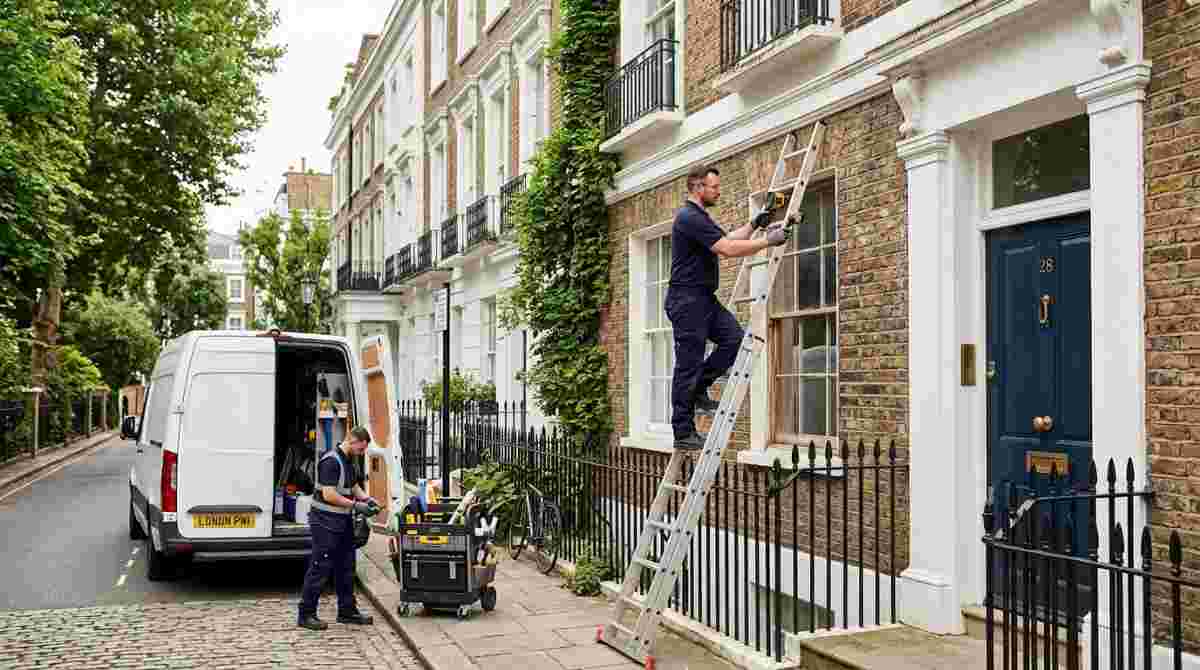
The requirements for residential and commercial properties are not always the same. A home may require occasional repairs and routine upkeep, while an office, retail property or larger building can require planned maintenance throughout the year. Residential property maintenance services can help landlords and homeowners deal with repairs, decorating, roofing and general upkeep. Commercial property maintenance can involve a broader range of building requirements. Depending on the property, this may include building maintenance, external areas and ongoing repair work.
Property Maintenance for Landlords
Landlords have an ongoing responsibility to keep their properties properly maintained. Maintenance requirements can range from straightforward repairs to issues involving the condition and safety of the property. Landlords should establish a clear process for reporting and dealing with maintenance issues. Prompt action can help prevent minor problems from becoming more serious. For properties with tenants, communication is particularly important. It should be clear who is responsible for reporting problems and how urgent repairs will be handled.
- Routine inspections: Regular checks can identify maintenance problems before they become major repairs.
- Responsive repairs: Reported issues should be assessed and addressed according to their urgency.
- Preventative maintenance: Planned work can help reduce the likelihood of unexpected failures.
- Record keeping: Maintaining records of inspections and completed repairs provides useful evidence of ongoing property care.
What Repairs Are Tenants Responsible For?
Tenant responsibilities depend on the tenancy agreement, the nature of the repair and the circumstances in which the damage occurred. Generally, tenants are expected to look after a property responsibly and report problems to the landlord or managing agent. They may be responsible for damage caused by their own actions or neglect, depending on the circumstances and the terms of their agreement. Landlords, meanwhile, generally remain responsible for many fundamental repair obligations. Because responsibilities can vary, tenants and landlords should check their tenancy agreement and relevant UK housing guidance before deciding who should pay for a repair. For significant disputes or uncertain responsibilities, obtaining appropriate professional or legal advice is preferable to making assumptions.
How Much Does Property Maintenance Cost in the UK?
There is no single average price for property maintenance because the cost depends on the size and type of property, the work involved and whether maintenance is reactive or planned. A small repair may only require a short visit, while a larger maintenance programme can involve multiple trades and recurring inspections. The frequency of maintenance also affects overall expenditure. Properties that receive regular preventative attention may identify problems earlier, although the exact financial benefit will depend on the building and work required.
Typical Maintenance Cost Factors
The figures below are best viewed as factors affecting the quotation rather than fixed UK prices.
| Factor | Potential Effect on Cost |
|---|---|
| Property size | Larger properties generally require more inspection and maintenance work |
| Property type | Residential, commercial and specialist buildings have different requirements |
| Repair complexity | More complicated work normally requires additional labour and materials |
| Urgency | Emergency or out of hours repairs can cost more than planned work |
| Materials | Replacement parts and materials contribute to the final price |
| Maintenance frequency | Regular programmes may involve recurring service costs |
| Access | Difficult access can increase labour, equipment and time requirements |
For an accurate price, the best approach is to describe the required work clearly and obtain a detailed quotation.
What Is the Average Monthly Cost of Property Maintenance?
A monthly maintenance budget can vary considerably between properties. A small residential property with few maintenance requirements may need relatively little ongoing expenditure, while a large building with multiple systems can require a much larger budget. Rather than relying on one average figure, property owners should consider the building’s age, condition, size and history of repairs. A planned maintenance budget can also include an allowance for unexpected problems. This is particularly useful for older properties where roofing, plumbing, electrical systems or external areas may require more attention.
Planned vs Reactive Maintenance
Planned maintenance involves scheduling inspections and work before a problem becomes urgent. Reactive maintenance occurs after something has failed or requires immediate attention. Both approaches can have a place in property management. Planned maintenance is particularly useful for recurring tasks such as inspections, decorating and external upkeep.
- Planned maintenance: Work is scheduled in advance according to the property’s needs.
- Reactive maintenance: Repairs are arranged after a fault or defect has been reported.
- Preventative maintenance: Regular checks are used to identify potential issues early.
- Emergency maintenance: Urgent problems are addressed quickly where they present significant risks or disruption.
Common Property Repairs in London
London properties can experience a wide range of maintenance problems. The appropriate response depends on the age and construction of the building and the cause of the issue. Common repair requirements can include roofing problems, leaking gutters, damaged fences, painting and decorating, general building repairs and other household maintenance. Some problems are relatively minor when discovered early but can become considerably more disruptive if ignored.
Roof and Gutter Maintenance
Roof maintenance is an important part of protecting a property from water damage. Missing or damaged roof materials, blocked gutters and defective drainage can contribute to leaks and damp problems. Regular visual inspections can help identify obvious defects. However, difficult or potentially dangerous areas should be assessed by an appropriately qualified professional. Gutter cleaning is another useful preventative task, particularly where leaves and debris accumulate.
How Much Does Gutter Cleaning Cost?
The cost of gutter cleaning depends on factors such as property height, gutter length, accessibility and the amount of debris present. A straightforward low level property may be easier to service than a tall building requiring specialist access equipment. For homeowners searching for how much does gutter cleaning cost, obtaining a quotation based on the actual property is more reliable than applying a single average price.
How Do You Find a Good Property Maintenance Company?
Choosing a maintenance company should involve more than looking for the lowest quotation. Reliability, communication, experience and the company’s ability to handle the required type of work are all important considerations. For London property owners, local knowledge can also be useful because properties vary considerably across the capital.
Before appointing a company, ask what services it provides and whether it regularly works on properties similar to yours.
- Check relevant experience: Look for experience with the type of property and maintenance work you require.
- Review the service scope: Make sure the quotation clearly explains what is included and excluded.
- Compare quotations: Comparing detailed quotations can help identify differences in labour, materials and services.
- Check reputation: Reviews, references and established business information can help you assess reliability.
Why Choose J Sons & Co.?
Property maintenance requires a practical understanding of the building, the work involved and the customer’s priorities. J Sons & Co. focuses on clear communication and practical maintenance solutions for property owners who want their buildings properly looked after. Every property presents different challenges. Our approach is therefore based on understanding the specific maintenance requirement rather than applying the same solution to every building.
A Practical Maintenance Approach
A well managed maintenance service should make it easier for property owners to understand what needs attention and what work should be prioritised. Clear communication is particularly valuable when several repairs are required at the same property.
- Property assessment: Understand the condition and maintenance requirements before recommending work.
- Clear communication: Explain the required work and keep customers informed throughout the process.
- Practical solutions: Focus on suitable repairs and maintenance rather than unnecessary work.
- Ongoing support: Help property owners address maintenance requirements as they arise.
Final Thoughts
Property maintenance London covers a broad range of services, from general repairs and roofing to gutters, decorating, grounds maintenance and commercial building upkeep. For landlords, homeowners and property managers, regular maintenance can help identify problems early and keep buildings in better condition. The cost of maintenance depends on the property, type of work, urgency, materials and access requirements. Instead of relying on a single average price, it is better to assess the actual property and obtain a clear quotation. Whether you need a one off repair or ongoing property maintenance services, choosing an experienced and reliable contractor can make managing your property considerably easier.

Frequently Asked Questions
What does property maintenance cover?
Property maintenance can include general repairs, roofing, gutter cleaning, painting and decorating, external maintenance, grounds work and other services required to keep a property in good condition.
What are some reputable property maintenance companies in London?
When choosing a company, consider relevant experience, customer reviews, service coverage, quotations and evidence that the contractor regularly handles properties similar to yours.
What is the average monthly cost of property maintenance in the UK?
There is no universal monthly cost because maintenance requirements vary by property size, condition, age, type and required services. A property specific maintenance budget is more useful.
How much does a property maintenance operative earn?
Earnings vary depending on experience, location, qualifications, employment arrangements and the type of maintenance work performed. Salaries should be checked against current UK employment and salary data.
What repairs are tenants responsible for?
Tenant responsibilities depend on the tenancy agreement and the circumstances surrounding the damage or repair. Tenants should report problems promptly and check their agreement before assuming they are responsible for a cost.