
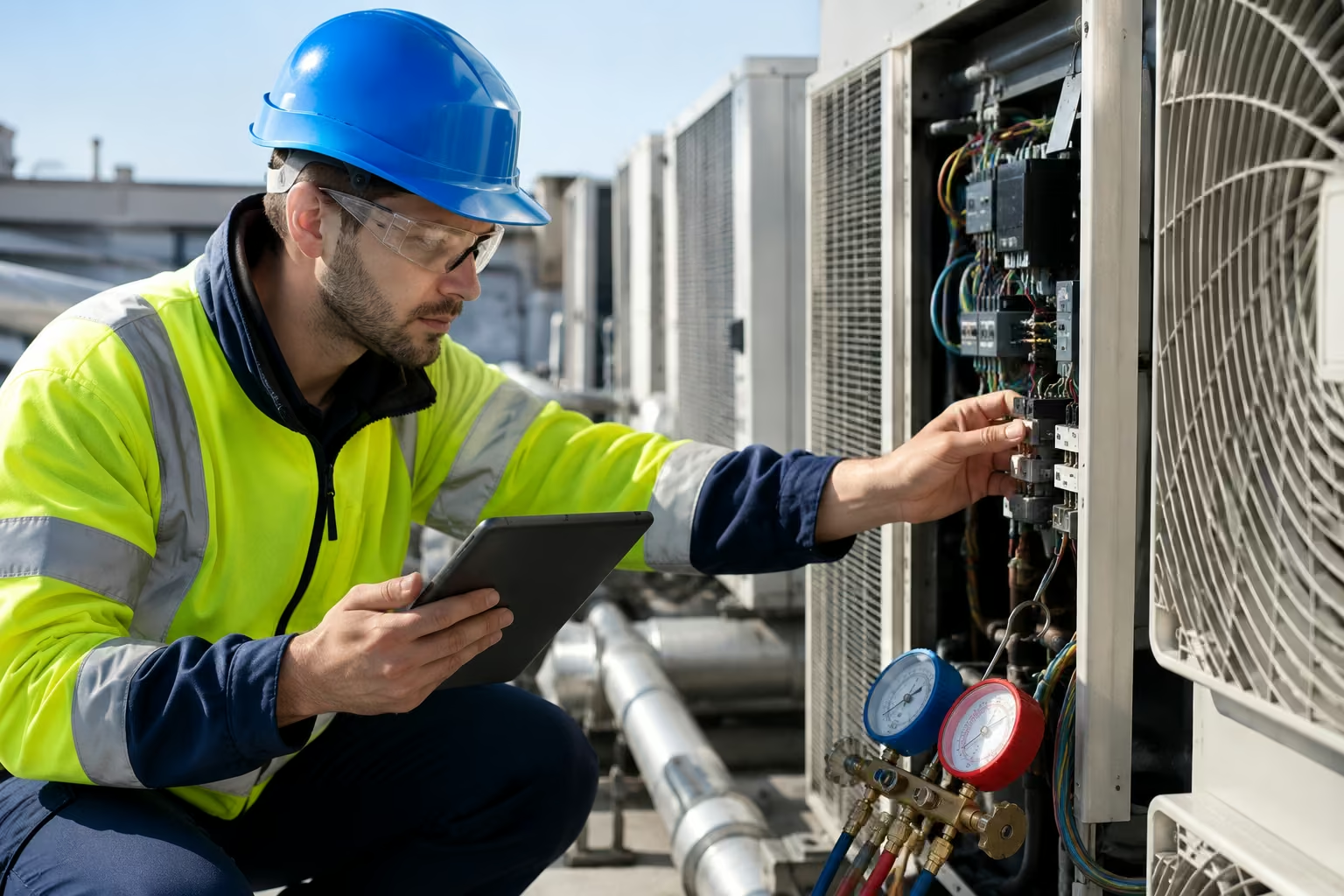
Building maintenance is essential for keeping commercial, residential, and industrial properties safe, efficient, and cost-effective. However, many property owners only address issues when something breaks down. This reactive approach often leads to unexpected costs, operational disruptions, and expensive repairs.
Planned Preventative Maintenance (PPM) offers a smarter solution. By scheduling regular inspections and maintenance activities, building owners can identify and resolve problems before they become major issues. Whether you manage an office building, retail space, warehouse, school, or residential block, a well-structured PPM programme can protect your investment and improve building performance.
What Is Planned Preventative Maintenance?
Planned Preventative Maintenance (PPM) is a proactive maintenance strategy that involves carrying out routine inspections, servicing, testing, and repairs at scheduled intervals to prevent equipment failures and building defects.
Rather than waiting for systems to break down, PPM focuses on maintaining assets in good working condition throughout their lifecycle.
A typical PPM programme covers HVAC systems, electrical installations, emergency lighting, fire alarm systems, plumbing systems, roofing and drainage, security systems, lifts and escalators, and the overall building structure.
The primary goal is to reduce the likelihood of unexpected failures while ensuring that all systems continue to operate safely and efficiently.
How Planned Preventative Maintenance Works
PPM involves creating a maintenance schedule based on manufacturer recommendations, legal requirements, asset age, and operational demands.
Maintenance tasks may include routine inspections, cleaning and servicing, testing safety systems, replacing worn components, lubricating moving parts, calibrating equipment, and recording maintenance activities.
These tasks are carried out on a weekly, monthly, quarterly, biannual, or annual basis depending on the asset and building requirements.
Benefits of Planned Preventative Maintenance
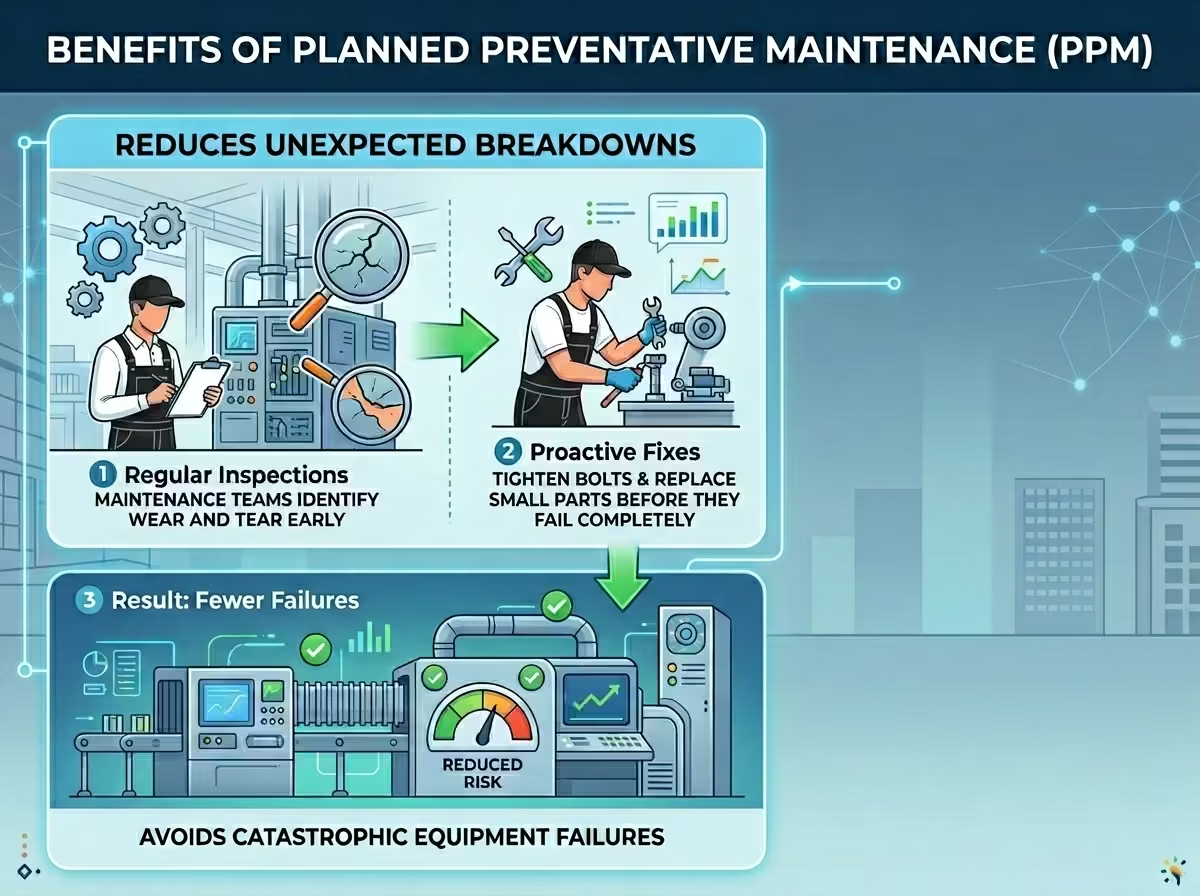
Reduces Unexpected Breakdowns
One of the biggest advantages of PPM is reducing the risk of sudden equipment failures. Regular inspections allow maintenance teams to identify wear and tear before it develops into a major problem.
This helps avoid costly emergency repairs and minimizes disruption to building occupants.
Lowers Long-Term Maintenance Costs
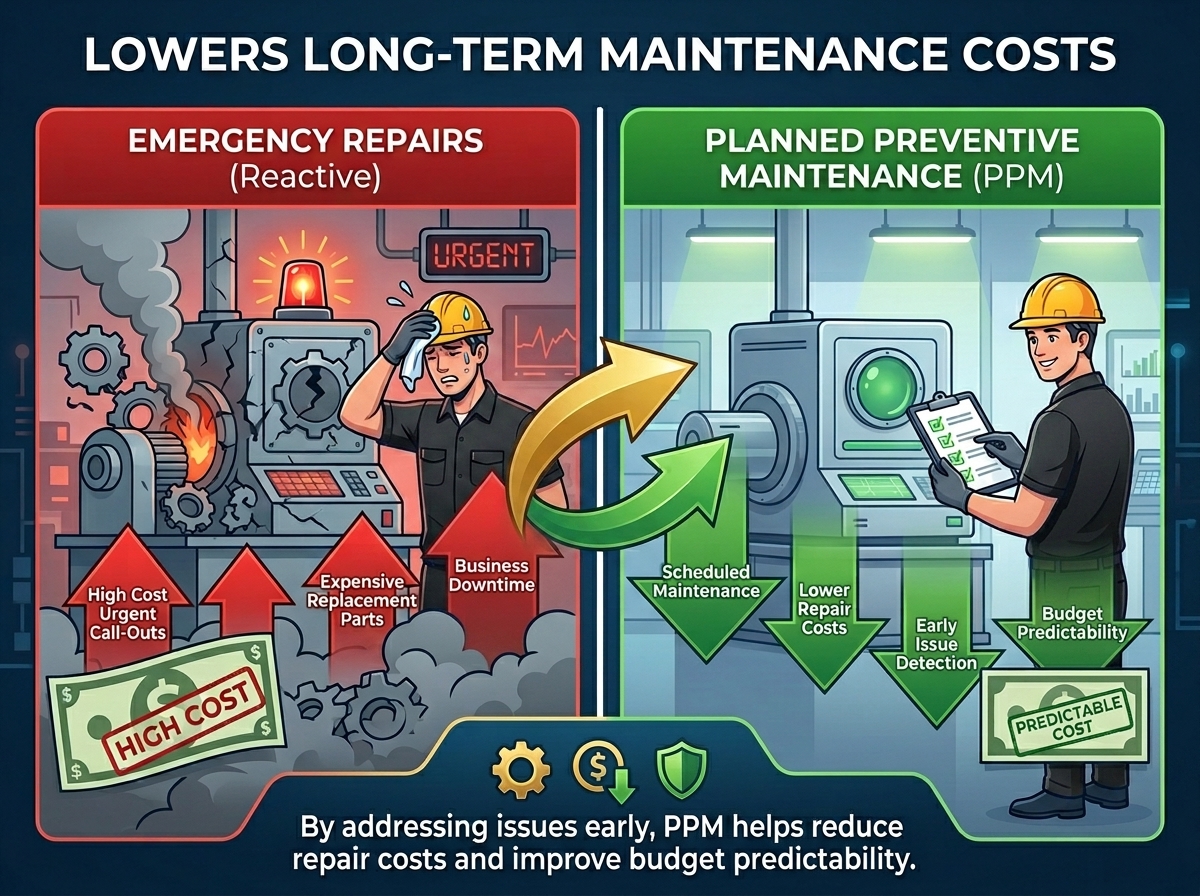
Emergency repairs are often more expensive than scheduled maintenance. Reactive maintenance may require urgent call-outs, replacement parts, and business downtime.
By addressing issues early, PPM helps reduce repair costs and improve budget predictability.
Extends Asset Lifespan
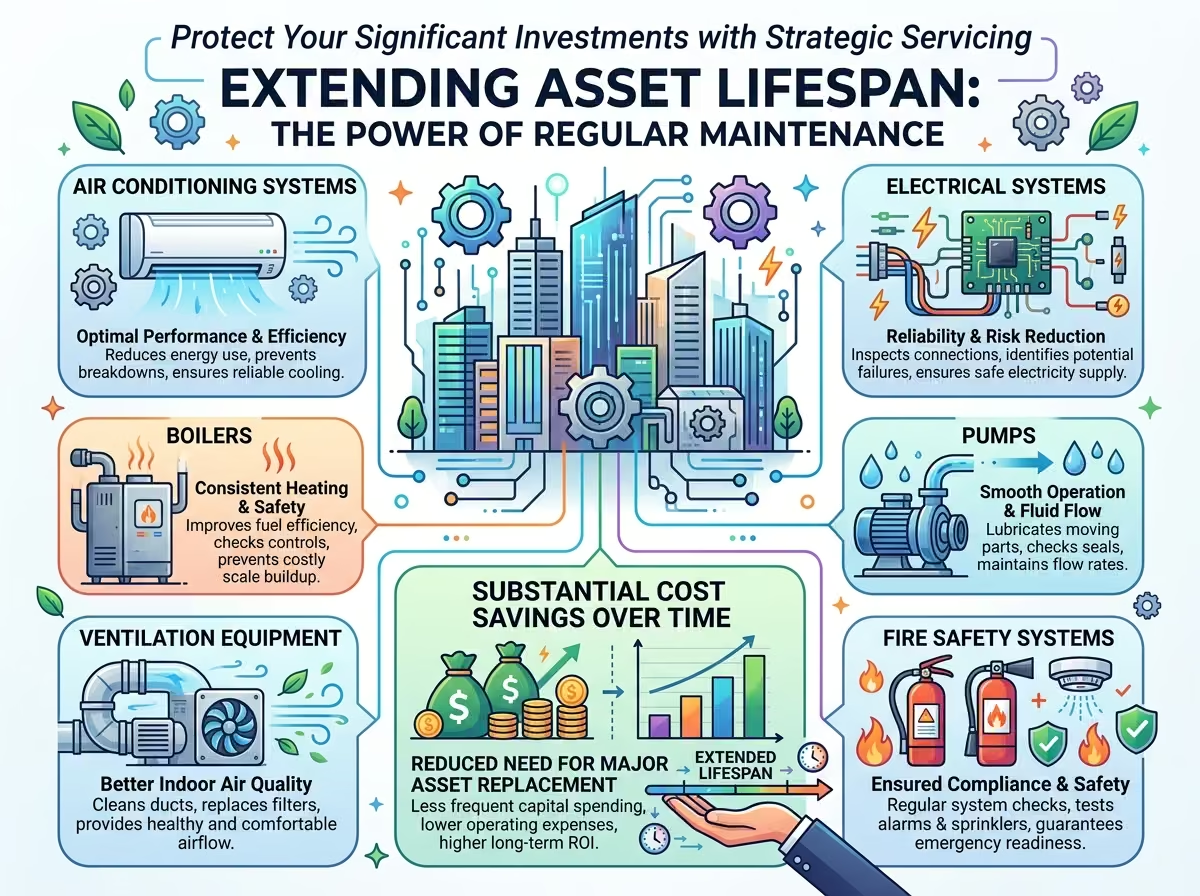
Building systems and equipment represent significant investments. Regular servicing ensures that assets continue operating efficiently for longer.
Proper maintenance can extend the lifespan of air conditioning systems, boilers, electrical systems, pumps, ventilation equipment, and fire safety systems.
Replacing major assets less frequently results in substantial cost savings over time.
Improves Health and Safety
Poorly maintained systems can create serious safety risks. Electrical faults, fire alarm failures, blocked emergency exits, and HVAC issues can all endanger building occupants.
A structured PPM programme helps identify and resolve hazards before they become dangerous.
Supports Legal Compliance
Many building systems are subject to legal inspection and maintenance requirements.
Examples include fire alarms, emergency lighting, electrical installations, gas systems, and lifting equipment.
Regular maintenance helps ensure compliance with health and safety regulations while reducing the risk of penalties or enforcement action.
Improves Energy Efficiency
Equipment that is regularly maintained typically operates more efficiently.
Clean HVAC filters improve airflow, properly calibrated controls reduce energy waste, and well-maintained motors consume less electricity.
Improved efficiency leads to lower utility bills and reduced environmental impact.
Why Commercial Buildings Need PPM
Commercial properties rely heavily on building services to support daily operations. Unexpected failures can result in business interruptions, loss of productivity, customer dissatisfaction, financial losses, and safety concerns.
A Planned Preventative Maintenance programme helps businesses maintain operational continuity while protecting employees and visitors.
For landlords and property managers, PPM also helps maintain property value and tenant satisfaction.
Key Areas Covered by Planned Preventative Maintenance
HVAC Systems
Regular servicing ensures heating, cooling, and ventilation systems operate efficiently throughout the year.
Electrical Systems
Inspections help identify faults, damaged wiring, and compliance issues before they become serious risks.
Fire Safety Equipment
Fire alarms, extinguishers, emergency lighting, and smoke detection systems must remain fully operational.
Plumbing and Water Systems
Routine maintenance helps prevent leaks, water damage, and system failures.
Building Fabric
Roofs, walls, windows, and drainage systems require regular inspections to prevent structural deterioration.
Choosing a Professional PPM Provider
Working with experienced maintenance professionals ensures your PPM programme is tailored to your building’s specific needs.
A reliable provider should offer detailed maintenance schedules, compliance support, asset tracking, inspection reports, emergency response services, and experienced engineers.
Professional maintenance planning helps maximize asset performance while minimizing operational risks.
Frequently Asked Questions
What is Planned Preventative Maintenance (PPM)?
Planned Preventative Maintenance is a scheduled maintenance strategy designed to prevent equipment failures and maintain building systems efficiently.
Why is Planned Preventative Maintenance important?
It helps reduce breakdowns, improve safety, extend equipment lifespan, and lower long-term maintenance costs.
What systems are included in a PPM programme?
Typical systems include HVAC, electrical installations, plumbing, fire alarms, emergency lighting, lifts, and security systems.
How often should Planned Preventative Maintenance be carried out?
The frequency depends on the equipment type, manufacturer recommendations, and legal requirements.
Does PPM save money?
Yes. Preventing failures through regular maintenance is usually far less expensive than emergency repairs and equipment replacement.
Is Planned Preventative Maintenance legally required?
Some maintenance activities related to fire safety, electrical systems, and workplace safety are required by law.
How does PPM improve energy efficiency?
Maintained equipment operates more efficiently, reducing energy consumption and utility costs.
What is the difference between preventative and reactive maintenance?
Preventative maintenance is scheduled to prevent failures, while reactive maintenance occurs after a problem has already happened.
Can PPM reduce equipment downtime?
Yes. Regular inspections identify potential issues early, reducing unexpected failures and operational disruptions.
Who should carry out Planned Preventative Maintenance?
Qualified maintenance engineers and professional building maintenance contractors should perform PPM activities to ensure safety, compliance, and reliability.