What happens when an electrical fault disrupts your workplace, an HVAC system stops working or a plumbing problem affects your customers? For commercial property owners and managers, building services need more than occasional attention. Mechanical, electrical and plumbing systems all play a role in keeping a workplace safe, functional and comfortable. This is why MEP Compliance Checks for Businesses should form part of a structured commercial property maintenance strategy.
MEP covers three core areas: mechanical, electrical and plumbing services. Depending on the property, these can include HVAC equipment, electrical installations, heating systems, water services, drainage, ventilation and other building infrastructure. For businesses in Wembley and across London, understanding MEP Compliance Checks for Businesses can make it easier to organise inspections, identify potential issues and maintain appropriate records.
What Are MEP Compliance Checks for Businesses?
MEP Compliance Checks for Businesses involve inspecting, testing, servicing and documenting relevant building systems according to the requirements that apply to a particular property and its equipment. There is no universal checklist that applies to every commercial building. An office, restaurant, warehouse, healthcare facility and retail unit can all have very different mechanical, electrical and plumbing requirements. Building size, occupancy, equipment type, system condition and how the premises are used can all influence the appropriate maintenance approach. Before arranging inspections, businesses should understand which systems are installed and what requirements apply to them.
Why Do Commercial Buildings Need These Checks?
Building services can have a direct effect on business operations. An electrical issue could interrupt equipment or lighting. A heating or cooling problem could make occupied areas uncomfortable. A plumbing failure could cause water damage or prevent washrooms and kitchens from operating normally. Regular inspection and appropriate maintenance can give property managers better visibility of their building systems and help them identify areas requiring attention.
7 Essential Areas for MEP Compliance Checks for Businesses
The exact requirements will vary from one property to another. However, several building service areas commonly deserve attention when reviewing a commercial property’s maintenance and compliance needs.
1. Electrical Installation Inspection
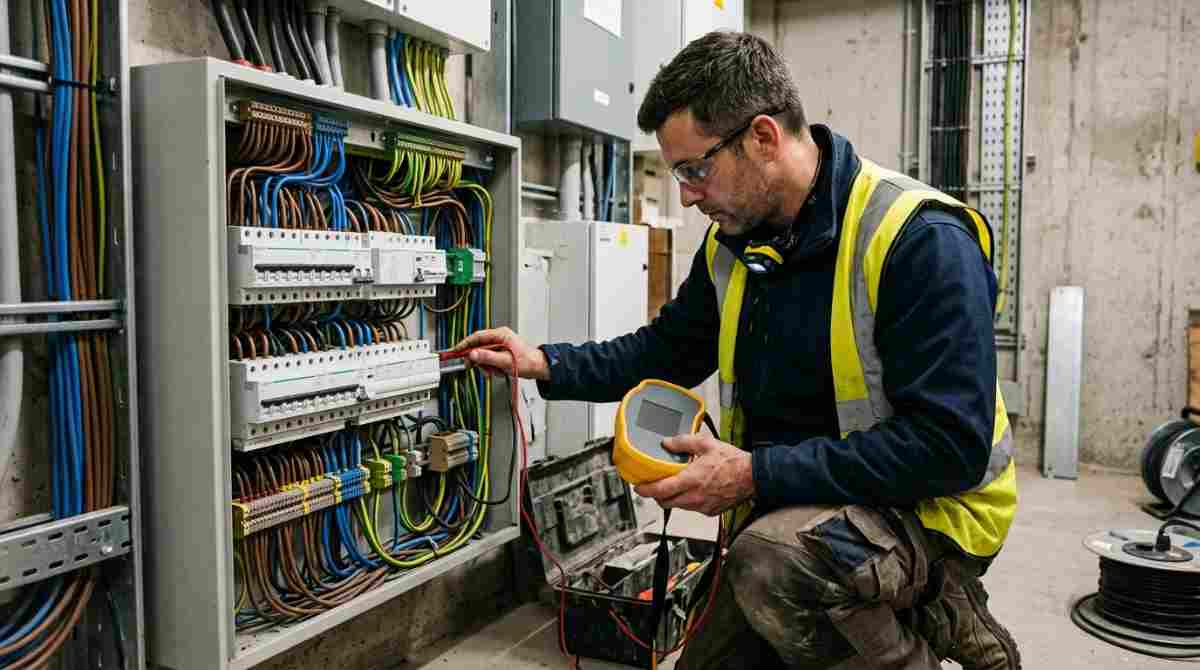
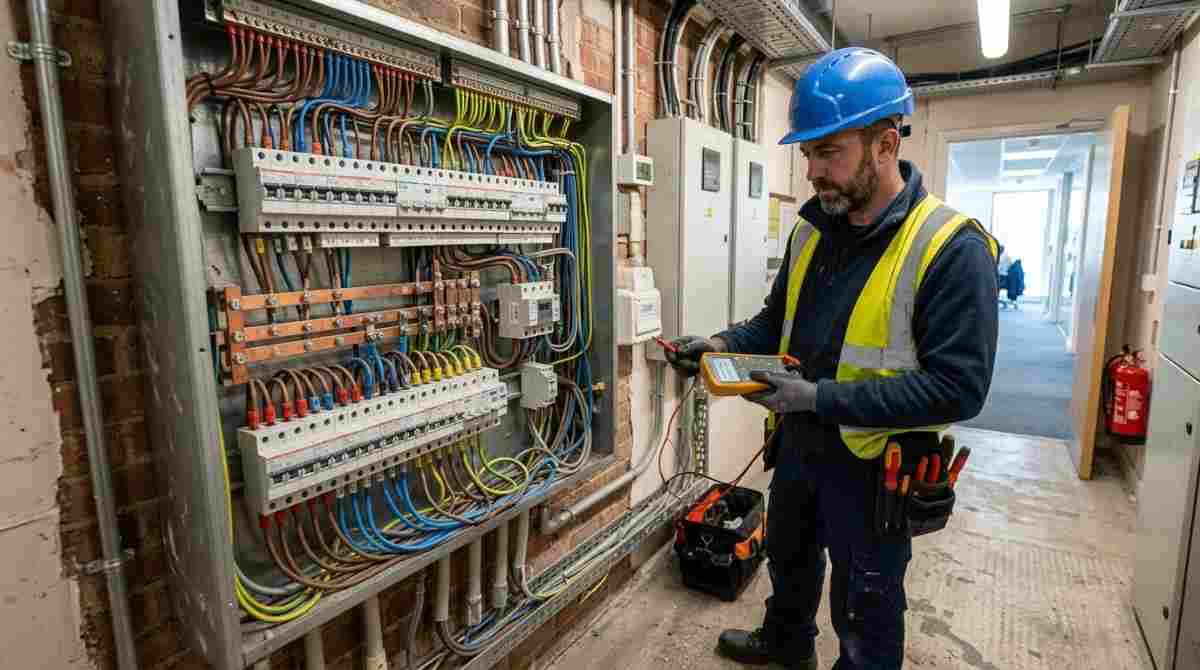
Electrical infrastructure is a fundamental part of almost every commercial property. Depending on the installation and circumstances, businesses may need periodic inspection and testing of fixed electrical systems. An Electrical Installation Condition Report, commonly known as an EICR, can be used to assess the condition of an electrical installation and identify defects. Checks may involve distribution boards, wiring, fixed equipment and other parts of the installation. The important point is not simply arranging an inspection. Property managers should understand the findings and ensure that appropriate remedial action is considered where necessary.
2. Emergency Lighting
Emergency lighting is designed to provide illumination when normal lighting fails. Commercial premises may require suitable testing and maintenance arrangements for emergency lighting systems according to the requirements applicable to the property. Regular checks can help identify problems such as failed fittings, battery issues or other faults. Businesses should also retain appropriate records of completed testing and maintenance so that property managers can keep track of the system’s condition.
3. Gas and Heating Systems
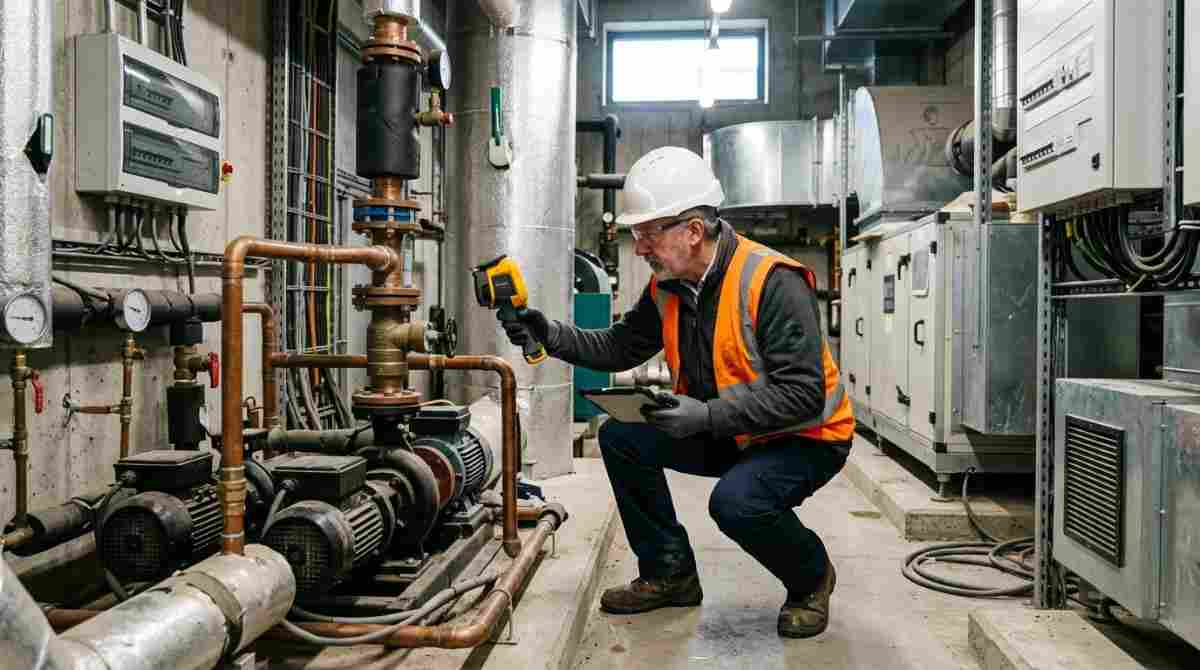
Commercial properties that use gas appliances or boilers require appropriate safety and servicing arrangements. Heating infrastructure can include boilers, pumps, controls, pipework and associated equipment. Its condition can affect both occupant comfort and normal business operations. Businesses should ensure that relevant servicing is carried out by appropriately qualified professionals and that applicable documentation is retained. Regular servicing may also identify developing faults before they result in an unexpected breakdown.
4. HVAC and Refrigeration Systems
Heating, ventilation and air conditioning equipment can be particularly important in commercial buildings. Offices, restaurants, retail premises and other occupied properties can depend on reliable temperature control and ventilation throughout the year. Where relevant equipment contains fluorinated gases, businesses also need to consider applicable F Gas requirements and appropriate record keeping. A suitable maintenance programme can help identify problems involving airflow, controls, refrigerant systems, filters and mechanical components.
5. Water Hygiene
Water systems require appropriate management in commercial premises. Depending on the building and its water infrastructure, businesses may need to consider Legionella risk management, temperature monitoring, storage tanks, hot water systems and other water hygiene measures. The requirements can vary significantly between different properties. A small office with a straightforward water system will not necessarily have the same considerations as a larger building with multiple outlets, showers, storage tanks or complex hot water infrastructure.
6. Plumbing and Drainage
Plumbing problems can quickly become operational problems for a business. A leaking pipe can damage a property, while a blocked drain can affect washrooms, kitchens or other occupied areas. Regular inspection can help identify visible deterioration, leaks, drainage problems and issues with sanitary equipment. For properties with commercial kitchens, multiple washrooms or high water usage, plumbing should be considered as part of the wider building maintenance programme rather than treated only as an emergency service.
7. Documentation and Maintenance Records
Completing an inspection is only one part of managing building services properly. Businesses should also maintain organised records of inspections, certificates, servicing, repairs and remedial work. Good documentation gives property managers a clearer history of what has been checked and what work remains outstanding. It can also be useful when responsibility for a building changes or when another engineer needs to understand the property’s previous maintenance history.
What Should You Do After an Inspection?
An inspection does not automatically mean that every identified issue requires immediate repair. The findings should be reviewed and prioritised according to their nature, severity and the requirements applicable to the property. A practical approach can help property managers avoid both unnecessary work and delays in dealing with important issues.
Before moving forward, review what the engineer has identified and determine which items require action.
- Review the report: Check the inspection findings, recommendations and any identified defects carefully.
- Prioritise important issues: Safety related or operationally significant problems should receive appropriate attention.
- Schedule remedial work: Less urgent repairs can be planned around business operations and property access.
- Update records: Keep reports, certificates, photographs and completed repair information together for future reference.
This creates a more organised process rather than treating every inspection as an isolated event.
How Often Should Commercial MEP Systems Be Checked?
There is no single inspection schedule that works for every commercial building. The appropriate frequency can depend on equipment type, manufacturer guidance, building usage, system condition, risk and applicable requirements. For this reason, businesses should avoid simply copying another property’s maintenance schedule. A commercial building should be assessed according to the systems actually installed and how those systems are used.
What Can Affect Maintenance Frequency?
Several factors can influence how frequently equipment needs attention. Older systems may require closer monitoring than recently installed equipment. Heavily used systems can also have different maintenance requirements from equipment operating occasionally. The type of business matters as well. A restaurant may place greater demands on ventilation, refrigeration, drainage and hot water systems, while an office may have different requirements involving HVAC, electrical infrastructure and general plumbing.
MEP Compliance Checks for Businesses in Wembley
Wembley has a diverse commercial property environment, including offices, retail premises, hospitality businesses and other commercial facilities. Each building can contain a different combination of mechanical, electrical and plumbing equipment. This means property managers should avoid relying on a generic checklist without first understanding the systems within their own premises. J Sons & Co. provides integrated mechanical, electrical and plumbing services for commercial properties in Wembley and across London.
The team supports building services including HVAC, electrical systems, commercial plumbing, planned maintenance and reactive repairs. For a property manager, having access to one contractor across multiple MEP disciplines can make communication and maintenance coordination more straightforward.
Why Choose J Sons & Co.?
MEP compliance involves more than finding someone who can attend when a system fails. Commercial property managers also need reliable communication, appropriate technical support and clear maintenance documentation. J Sons & Co. provides integrated mechanical, electrical and plumbing services for a range of commercial property types across London.
The team works with offices, retail properties, restaurants and hospitality premises, healthcare facilities, education sites, industrial and logistics buildings and residential blocks. The service approach can include planned maintenance, reactive repairs, inspections, testing and reporting. For businesses, this provides a single point of contact for multiple building service requirements rather than requiring separate contractors for every discipline.
A Practical Commercial Maintenance Approach
Every building has different requirements. J Sons & Co. can review the property’s systems and discuss an appropriate approach based on the equipment, building use and maintenance requirements. The objective should not simply be to complete as many checks as possible. The more useful approach is to understand the building, identify relevant requirements, document findings and deal with issues according to their importance.
How Compliance and Maintenance Work Together
Inspection and maintenance should not be treated as completely separate activities. An inspection may identify a developing problem that needs immediate attention. Another finding may be suitable for planned remedial work during a quieter period. This creates a connection between compliance management and routine building maintenance. For MEP Compliance Checks for Businesses, the inspection itself is only one part of the process. Businesses also need a clear way to review findings, arrange appropriate action and retain useful documentation.
Turning Findings Into Action
Once an inspection report has been completed, property managers should review the recommendations and decide what action is appropriate. Some findings may require prompt attention, while others can be incorporated into a future maintenance programme. Keeping a clear record of these decisions can make future property management easier and reduce the risk of important tasks being overlooked.
Frequently Asked Questions
1. What are MEP compliance checks for businesses?
MEP Compliance Checks for Businesses are inspection, testing, servicing and documentation activities relating to mechanical, electrical and plumbing systems within a commercial property.
2. What systems are normally included?
Depending on the property, relevant systems can include HVAC, electrical installations, heating, plumbing, drainage, ventilation, refrigeration and water systems.
3. How often should commercial building systems be checked?
There is no universal frequency. The appropriate schedule depends on the equipment, building use, manufacturer requirements, system condition, risk and applicable requirements.
4. Does a commercial property need an EICR?
The need and appropriate frequency depend on the specific electrical installation and circumstances. Businesses should obtain suitable professional advice based on their property.
5. Are HVAC systems part of MEP compliance?
Yes. HVAC forms part of the mechanical side of MEP. Depending on the equipment, businesses may need to consider servicing, ventilation, refrigerant management and applicable F Gas requirements.
6. Can J Sons & Co. manage different MEP services?
Yes. J Sons & Co. provides mechanical, electrical and plumbing services, including planned maintenance, reactive repairs, testing and other building service support for commercial properties across London.
Final Thoughts
Commercial building compliance is not simply about completing an inspection and filing the paperwork. Mechanical, electrical and plumbing systems need to be understood as part of the wider property. Their condition, usage and maintenance requirements can change over time as equipment ages, businesses expand and buildings are modified. A structured approach can give property managers better visibility over their systems and help them organise inspections, remedial work and ongoing maintenance. For businesses in Wembley and across London, J Sons & Co. can provide integrated support across mechanical, electrical and plumbing services. If you need to review your commercial property’s building services or arrange appropriate inspection and maintenance support, contact J Sons & Co. to discuss your requirements.