
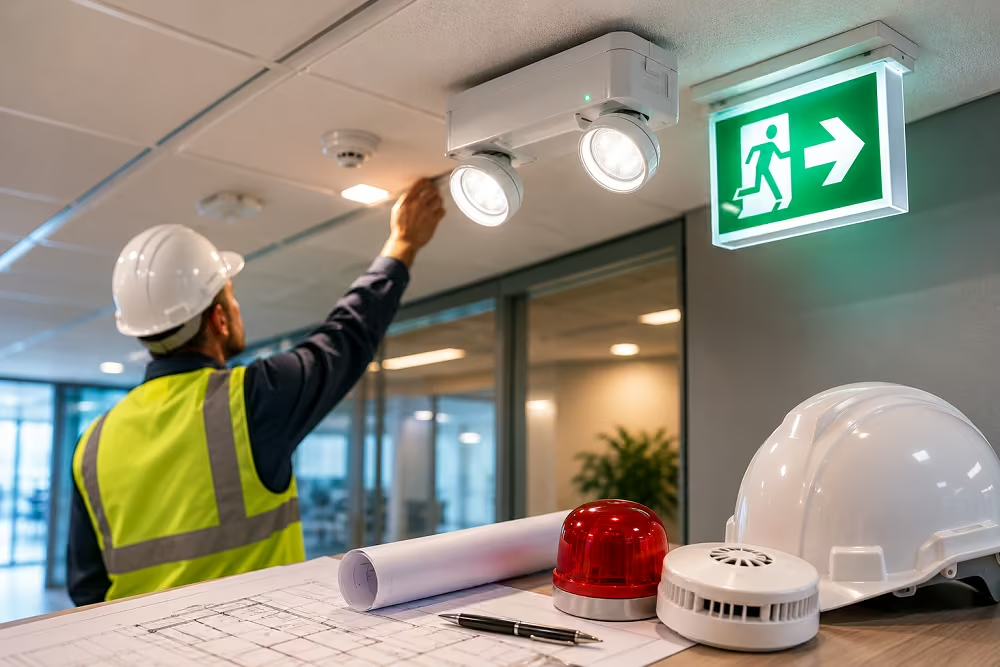
Emergency lighting is a vital safety feature in any commercial, residential, or public building. In the event of a power failure, fire, or other emergency, emergency lighting helps occupants find exits safely and evacuate the building without panic. For London building owners, ensuring emergency lighting compliance is not only a legal responsibility but also an essential part of protecting lives and property.
This guide explains the basics of emergency lighting compliance, why it matters, and what building owners need to do to meet their obligations.
What Is Emergency Lighting?
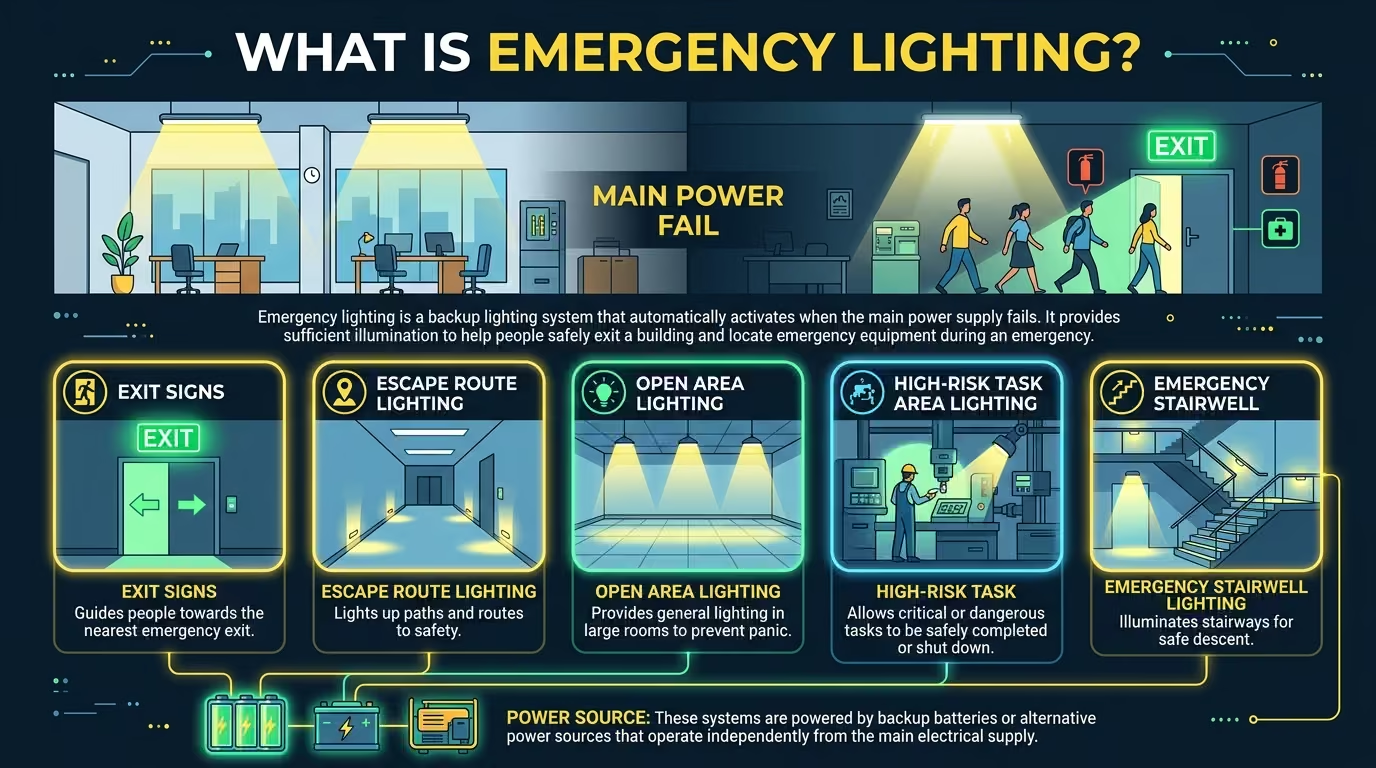
Emergency lighting is a backup lighting system that automatically activates when the main power supply fails. It provides sufficient illumination to help people safely exit a building and locate emergency equipment during an emergency.
Emergency lighting typically includes:
- Exit signs
- Escape route lighting
- Open area lighting
- High-risk task area lighting
- Emergency stairwell lighting
These systems are powered by backup batteries or alternative power sources that operate independently from the main electrical supply.
Why Emergency Lighting Is Important
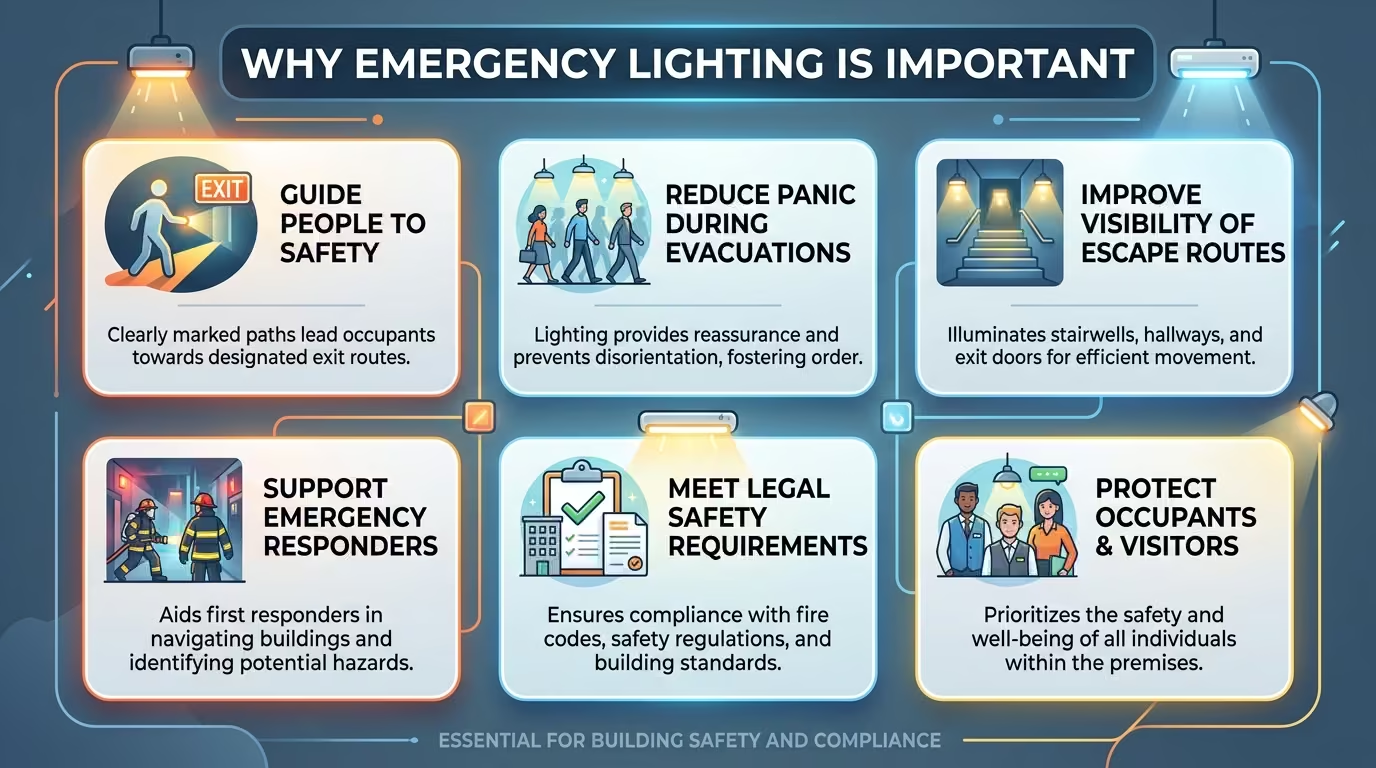
During an emergency, visibility can quickly become limited. Without adequate lighting, occupants may struggle to find exits, increasing the risk of injuries and confusion.
Proper emergency lighting helps:
- Guide people to safety
- Reduce panic during evacuations
- Improve visibility of escape routes
- Support emergency responders
- Meet legal safety requirements
- Protect building occupants and visitors
For businesses, maintaining compliant emergency lighting can also reduce liability and demonstrate commitment to workplace safety.
Emergency Lighting Regulations in London
Building owners in London must comply with several UK safety regulations relating to emergency lighting, including:
- Regulatory Reform (Fire Safety) Order 2005
- BS 5266 Emergency Lighting Standards
- Health and Safety at Work legislation
- Building Regulations where applicable
These regulations require responsible persons to ensure that emergency escape routes remain adequately illuminated and that emergency lighting systems are properly maintained.
Failure to comply can result in enforcement notices, fines, prosecution, and increased risks during emergencies.
Which Buildings Require Emergency Lighting?
Emergency lighting is required in many types of buildings, including:
- Office buildings
- Retail stores
- Restaurants and cafes
- Hotels and guest accommodation
- Schools and colleges
- Healthcare facilities
- Warehouses
- Apartment blocks with communal areas
- Entertainment venues
The exact requirements depend on the building’s size, layout, occupancy levels, and fire risk assessment.
Types of Emergency Lighting
Escape Route Lighting
This type illuminates designated escape routes, corridors, stairways, and exits to ensure safe evacuation.
Open Area Lighting
Also known as anti-panic lighting, it helps occupants move safely through larger open spaces and locate escape routes.
High-Risk Task Area Lighting
Used in areas where dangerous equipment or processes operate, allowing workers to shut down equipment safely during a power failure.
Exit Sign Lighting
Illuminated exit signs help occupants quickly identify emergency exits, especially in low-visibility conditions.
Emergency Lighting Testing Requirements
Installing emergency lighting is only part of compliance. Regular testing and maintenance are equally important.
Monthly Functional Testing
A brief monthly test should be conducted to verify that:
- Emergency lights activate correctly
- Exit signs illuminate properly
- Batteries function as expected
- No visible damage exists
The results should be recorded in a maintenance logbook.
Annual Full Duration Test
A comprehensive annual test should assess whether the emergency lighting system can operate for its full rated duration, typically three hours.
This inspection should verify:
- Battery performance
- Light output levels
- System reliability
- Compliance with applicable standards
Many building owners hire qualified electricians or fire safety specialists to perform annual inspections.
Maintaining Emergency Lighting Compliance
To maintain compliance, building owners should:
Conduct Regular Inspections
Routine visual inspections help identify damaged fittings, faulty batteries, or obstructed escape routes.
Keep Accurate Records
Maintain records of:
- Monthly tests
- Annual inspections
- Repairs and maintenance
- Battery replacements
- System upgrades
Documentation may be requested during fire safety inspections.
Replace Faulty Components Promptly
Any defective lights, batteries, or signs should be repaired or replaced immediately to ensure continuous protection.
Review Fire Risk Assessments
Changes to building layouts, occupancy levels, or usage may affect emergency lighting requirements. Fire risk assessments should be reviewed regularly.
Benefits of Professional Emergency Lighting Services
Working with qualified electrical contractors provides several advantages:
- Accurate compliance assessments
- Professional installation
- Reliable testing and maintenance
- Detailed inspection reports
- Reduced legal risks
- Improved occupant safety
Experienced professionals understand current regulations and can help ensure systems remain compliant over time.
Common Emergency Lighting Compliance Mistakes
Building owners sometimes make mistakes that can compromise safety and compliance, including:
- Failing to conduct regular testing
- Neglecting maintenance records
- Ignoring faulty emergency lights
- Using outdated systems
- Blocking escape routes
- Not updating systems after building modifications
Avoiding these issues helps ensure that emergency lighting remains effective when it is needed most.
FAQs
1. What is emergency lighting?
Emergency lighting is a backup lighting system that automatically operates when the main power supply fails, helping occupants evacuate safely.
2. Is emergency lighting mandatory in commercial buildings?
Yes. Most commercial buildings are legally required to provide suitable emergency lighting for safe evacuation.
3. How often should emergency lighting be tested?
A basic functional test should be performed monthly, while a full-duration test should be carried out annually.
4. What is BS 5266?
BS 5266 is the British Standard that provides guidance on the design, installation, and maintenance of emergency lighting systems.
5. Who is responsible for emergency lighting compliance?
The building owner, employer, landlord, or designated responsible person is typically responsible for ensuring compliance.
6. How long should emergency lighting operate during a power failure?
Most emergency lighting systems are designed to operate for at least three hours during a power outage.
7. Do residential apartment buildings need emergency lighting?
Many apartment blocks require emergency lighting in communal areas, stairwells, corridors, and escape routes.
8. What happens if emergency lighting fails an inspection?
Any faults should be repaired promptly, and the system should be retested to ensure compliance and safety.
9. Are maintenance records required?
Yes. Testing and maintenance records should be kept as evidence of compliance and ongoing system reliability.
10. Can a qualified electrician inspect emergency lighting?
Yes. Qualified electricians and fire safety specialists can inspect, test, maintain, and certify emergency lighting systems.