
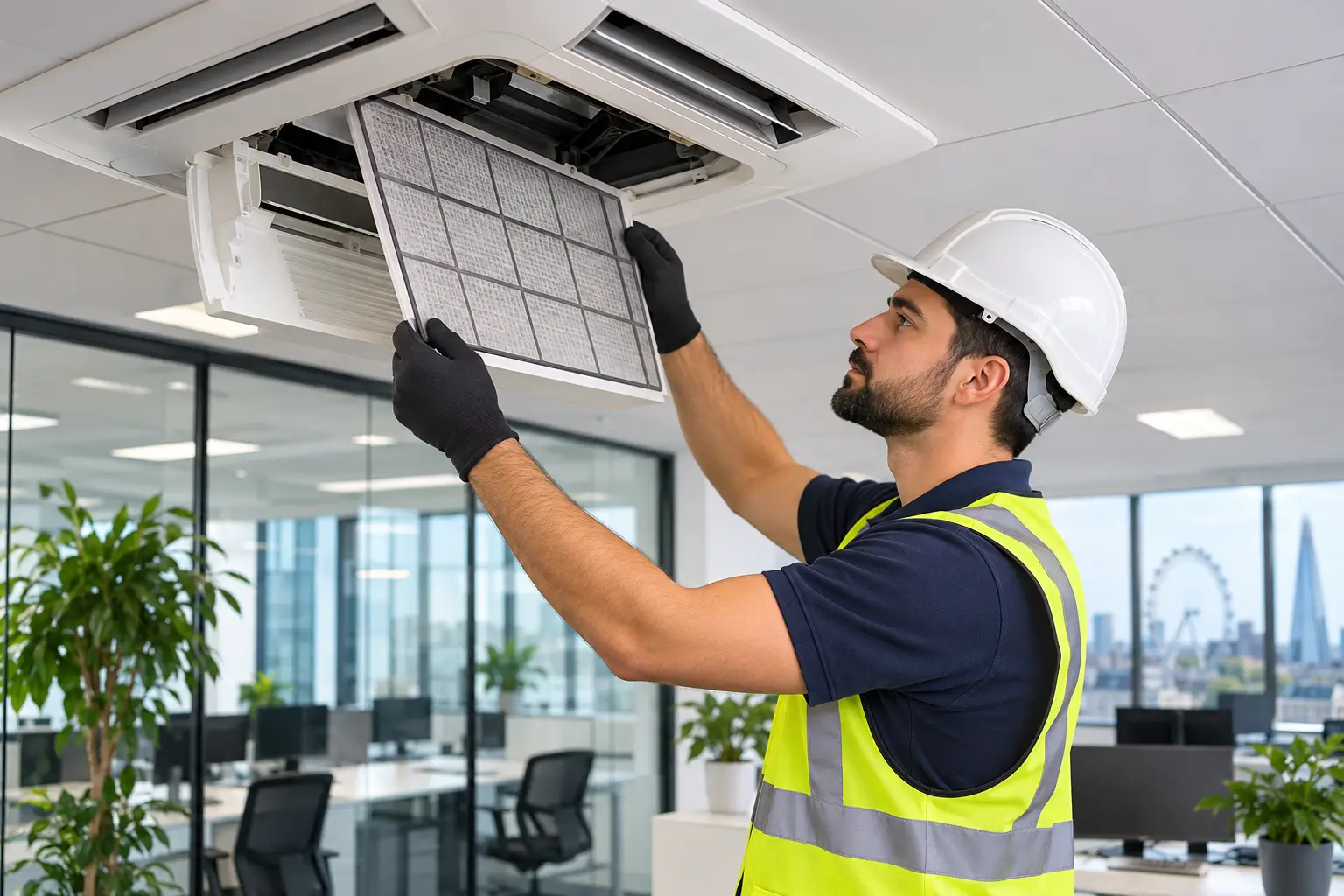
Why planned maintenance matters for commercial air conditioning
Commercial air conditioning maintenance London businesses rely on is essential for keeping offices, retail spaces and commercial premises comfortable throughout the year. Regular inspections help identify developing issues, maintain airflow, improve system performance and reduce the risk of unexpected equipment disruption.
The right maintenance schedule depends on the equipment, operating hours, environment, manufacturer recommendations and any applicable legal requirements. A busy retail unit, office and specialist commercial space will not necessarily need the same checks at the same frequency.
Commercial air conditioning maintenance checklist
1. Check filters and visible indoor-unit condition
Filters can collect dust and airborne particles during normal operation. Where filters are designed to be user-accessible, follow the manufacturer’s instructions for inspection and cleaning. A maintenance visit should also consider the condition of accessible indoor-unit components. Do not open sealed electrical compartments or attempt work that requires specialist training.

2. Look for changes in airflow
Weak or uneven airflow can have several causes, including a dirty filter, blocked return-air path, fan issue or a control problem. Check whether the symptom affects one room or several. Avoid assuming that increasing the thermostat setting will resolve an airflow fault.
3. Check condensate drainage and signs of water
Many cooling systems remove moisture from indoor air. Condensate needs to drain correctly. Water marks, dripping or damp around an indoor unit should be investigated rather than ignored. The source may be a blocked drain, poor pipe fall, damaged insulation or another issue that requires a technician.
4. Keep outdoor equipment clear
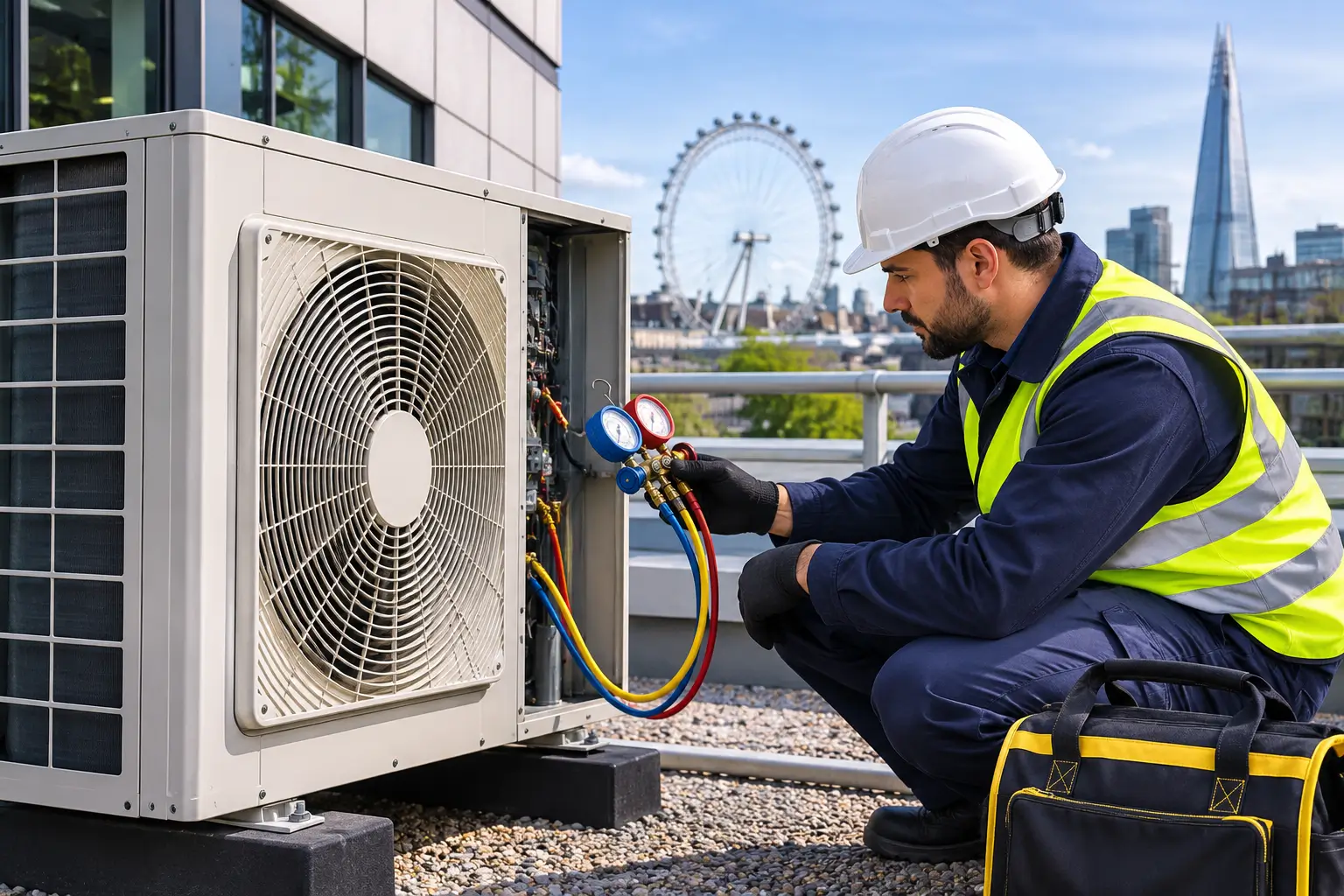
Outdoor units need suitable airflow to reject heat. Leaves, packaging, stored items or other obstructions can restrict the air path. Keep the surrounding area clear where it is safe and permitted to do so. Do not remove guards or reach into moving equipment.
5. Review controls and operating patterns
Check whether schedules, set points and operating modes still reflect how the building is used. A meeting room that is occupied only occasionally may not need to operate in the same way as a continuously occupied workspace. Unusual cycling, unexplained shutdowns or inconsistent temperatures should be recorded for investigation.
6. Note unusual noise, odour or recurring faults
New rattling, vibration, unusual smells or repeated fault indications are useful diagnostic clues. Record when the symptom occurs, which unit is affected and whether it follows a particular operating schedule. If there is an electrical burning smell or another immediate safety concern, stop using the affected equipment if safe to do so and seek appropriate professional assistance.
7. Review service records and refrigerant obligations
Keep equipment details, service records and any relevant refrigerant records together. F-gas leak-check duties depend on the refrigerant charge expressed in tonnes of CO2 equivalent and the applicable rules. Not every air conditioning unit has the same leak-check requirement. The responsible operator should confirm the requirements for the specific equipment using current GOV.UK guidance.
A simple maintenance planning table
| Area to review | What to look for | Action |
| Filters and indoor unit | Visible dust or restricted airflow | Follow manufacturer guidance; arrange service if needed |
| Drainage | Drips, water marks or damp | Arrange investigation; do not ignore recurring water |
| Outdoor unit | Obstructed air path or visible damage | Keep clear where safe; request professional inspection |
| Controls | Incorrect schedules or unusual cycling | Review settings and log recurring faults |
| Records | Missing equipment or refrigerant information | Update asset records and confirm applicable obligations |
How often should a commercial AC system be serviced?
There is no single maintenance interval that suits every system. Follow the manufacturer’s instructions and set a maintenance plan based on equipment type, usage, environment and the consequences of downtime. A system operating for long hours in a dusty or high-occupancy environment may need more attention than equipment used occasionally in a clean space. A qualified contractor can help establish a schedule after reviewing the equipment and its service history.
What should a professional maintenance visit include?
The scope should be agreed for the actual equipment. Depending on the system and the contractor’s qualifications, a visit may include checking accessible components, filters, airflow, drainage, controls, electrical condition, outdoor-unit condition and operating performance. Refrigerant-circuit work and F-gas leak checks must be handled by appropriately qualified personnel where the regulations require it. Ask for a clear service record describing what was checked, any defects found and recommended follow-up work.
Frequently asked questions
Does every air conditioning unit need an F-gas leak check?
No. The legal leak-check requirement depends on the type of equipment and the quantity of F-gas expressed in tonnes of CO2 equivalent, with specific exemptions and thresholds. Check the current GOV.UK guidance for the actual equipment.
Can staff clean an air conditioning filter?
Only where the manufacturer identifies the filter as user-accessible and provides instructions for safe cleaning. Electrical compartments, refrigerant circuits and internal repairs should be left to appropriately qualified professionals.
What information should I give an air conditioning engineer?
Provide the unit make and model if available, the location of the affected unit, operating hours, fault codes and a description of when the issue occurs. Photos of visible water marks or display codes can also help with the initial discussion.
For commercial premises in Wembley and across London, J Sons & Co can discuss property maintenance requirements. Share the site postcode, equipment type and any recurring symptoms so the team can confirm whether it can assist.
Publishing check: the website was showing maintenance mode during preparation. Test every internal URL after the site is live; replace any unavailable page with the correct current destination.