
Commercial Building Maintenance Services for Homes & Businesses in London
Who We Are?
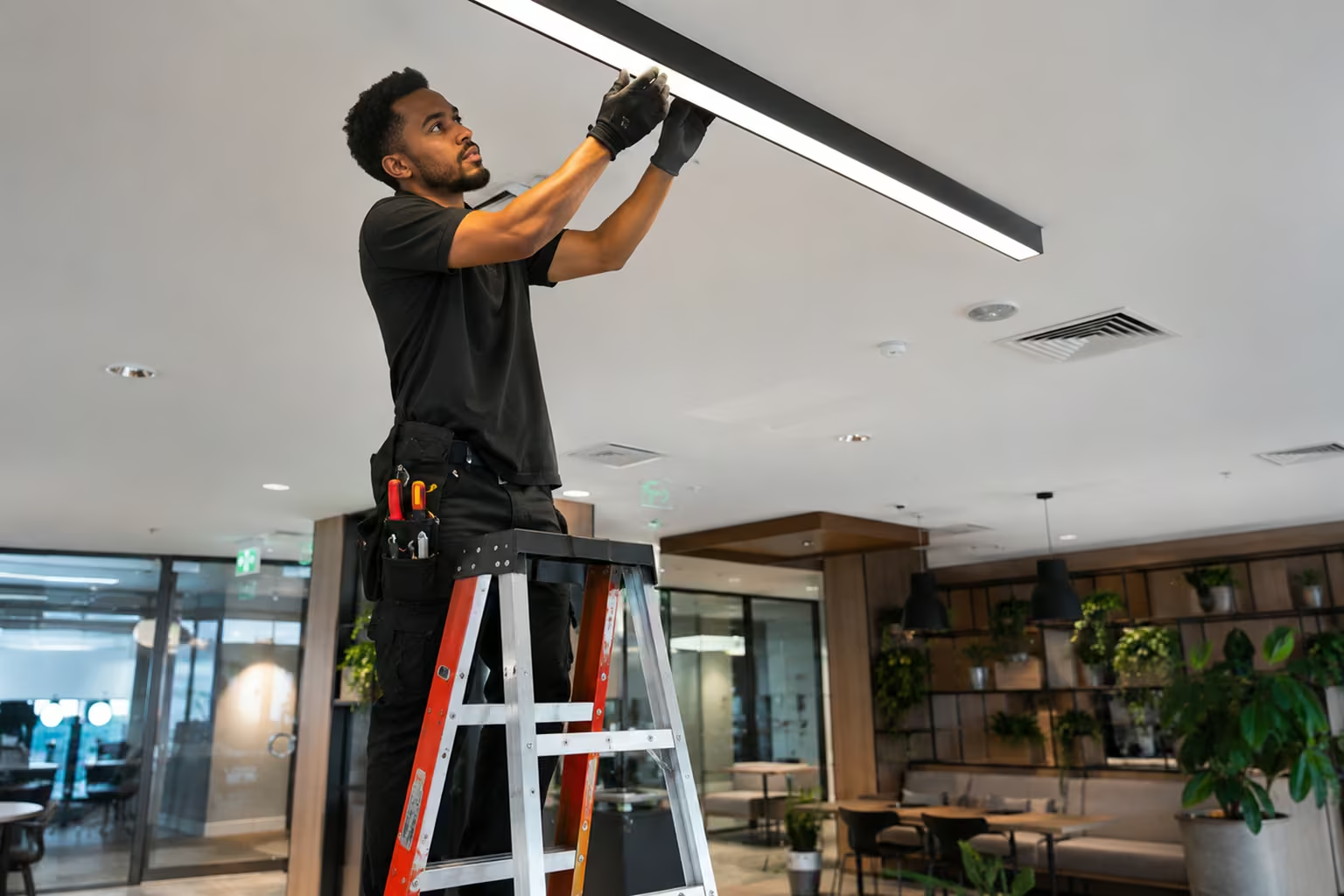
J SONS & CO. delivers reactive and planned commercial building maintenance across London. Single small works, emergency call-outs, planned preventative maintenance (PPM) contracts in the UK, for offices, retail, hotels, restaurants, healthcare facilities, schools, residential buildings, and luxury estates.
The work covers everything a commercial building needs day-to-day to stay operational, safe and compliant fabric repairs, joinery, plastering, decorating, minor electrical, plumbing, roof works, drainage, glazing, ironmongery, sign repairs, fire-stopping, and the dozens of small jobs that landlords, property managers, FM teams and building owners would otherwise spend their week coordinating across multiple contractors.
Our London team is SafeContractor accredited, SFG20-aligned for PPM scheduling, with directly-employed multi-trade engineers.
Reactive Maintenance, Planned Maintenance and Why You Need Both
Most commercial buildings need both kinds of maintenance. They serve different purposes and the right strategy combines them.
Reactive Maintenance
Repair work done in response to a fault or breakdown a blocked drain, a failed lock, a leaking pipe, broken glass, a faulty light circuit, damaged plaster, a malfunctioning entry system. By definition, reactive work is unplanned, often urgent, and almost always more expensive per visit than the same work delivered under a planned programme.
For commercial operators, reactive maintenance is the buffer that handles the unforeseen small daily failures that no PPM programme can anticipate. The question is not whether you need reactive maintenance (you do), but how much of your annual maintenance spend is reactive vs. planned.
Planned Preventative Maintenance (PPM) UK
Scheduled inspection, servicing and minor repair carried out before things break. PPM is the structured side of the maintenance budget calendarised, documented, and aligned with the manufacturer guidelines, regulatory requirements and industry standards (SFG20 is the de facto UK standard for building maintenance task frequencies).
A well-designed PPM programme typically reduces reactive maintenance spend by 30–50% over 18–24 months and significantly extends asset lifespan. Industry consensus and our own takeover-survey data put the savings ratio at £1 of PPM saving £3–£5 of reactive work over time.
The Right Reactive-to-PPM Ratio
For a well-managed commercial building, planned maintenance typically represents 60–75% of total annual maintenance spend, with reactive making up the remaining 25–40%. Buildings running 80%+ reactive are almost always over-spending and under-performing assets fail prematurely, compliance documentation is patchy, and emergency call-outs distort the budget.
What We Maintain
We cover the full building fabric and all the minor trades that keep a commercial space operational. Larger MEP works are covered by our MEP Services team; full HVAC service contracts run through our HVAC & Refrigeration pillar. Building maintenance sits between them the day-to-day trades that keep the building functional.
Building Fabric
Brick, blockwork, render and stone repair. Lintel replacement. Damp-proof course repair. External wall sealing and crack repair. Internal plastering and skimming. Drywall and partition repair. Ceiling repair (suspended grid ceilings, MF ceilings, plasterboard ceilings). Mastic and sealant renewal. Movement-joint repair.
Joinery and Carpentry
Door repair and replacement (internal and external, fire-rated doors, glazed doors, automatic doors). Frame repair and re-hanging. Skirting and architrave. Bespoke joinery repair. Window repair and re-glazing. Locks and ironmongery replacement of escutcheons, cylinders, mortice locks, panic hardware, automatic door operators, master-key systems.
Roofing and External Works
Flat-roof repair (felt, EPDM, single-ply membranes). Pitched-roof tile and slate replacement. Gutter clearance, repair and replacement. Downpipe repair. Fascia, soffit and bargeboard. Roof access hatch and walkway repair. Lightning protection inspection coordination. External wall and façade minor repair. Pointing and re-pointing.
Drainage and Below-Ground
Drain clearance, CCTV drain survey, drain repair, gully and trap clearance, soakaway maintenance, rainwater drainage repair, soil and waste pipe repair, internal floor drains and grease trap maintenance for commercial kitchens.
Glass and Glazing
Internal glass partition repair, double-glazed unit replacement, shopfront glass replacement, mirror replacement, splashback glass, glass door repair, board-up service for emergency glazing and security situations.
Decorating and Wall Coverings
Internal and external decorating, wall covering repair and replacement, signage repair and re-application, anti-graffiti coating, line-marking refresh (covered in depth on our Painting and Decorating page).
Minor Electrical Works
General lighting replacement and minor electrical works carried out by qualified Part P replacement of switches and sockets, light fittings, emergency lighting battery replacement, minor circuit work, faulty socket diagnosis, RCD trip diagnosis. Larger electrical works are covered by our MEP team.
Minor Plumbing Works
General plumbing leak repair, isolation valve replacement, tap and mixer replacement, sanitary ware replacement, washroom plumbing, kitchen plumbing, water hammer remediation, cold-water tank inspection, water-heater minor repair. Larger plumbing and pressurised hot water systems covered by our MEP team.
Floor Care
Skirting tile replacement, vinyl and lino patch repair, carpet patch repair, sub-floor leveling for minor issues, tile re-grouting and re-sealing, anti-slip strip replacement.
Pest Proofing
Minor pest proofing bird-deterrent installation, mesh installation, fly-screen installation, gap-sealing for pest exclusion. Pest treatment itself runs through our Cleaning Services supply chain.
Signage and Wayfinding
Repair and replacement of internal signage, external building signage minor repair, statutory signage (fire exit, accessibility, statutory notices), wayfinding signs.
Fire-Stopping and Compartmentation
Repair and re-instatement of fire-stopping at service penetrations through fire-rated walls and floors critical for compliance under Building Regulations Part B london or across the UK frequently degraded during cable, pipe and ducting works carried out over a building’s life.
SFG20 The UK Maintenance Standard
SFG20 is the UK industry standard for building maintenance. Published by the Building Engineering Services Association (BESA), it lists every maintenance task that applies to every type of asset commonly found in commercial buildings, and the recommended frequency at which each task should be carried out.
For commercial property managers, FM directors and landlords in the UK, SFG20 is the benchmark. Insurance companies, regulators, tribunals and dilapidations surveyors all reference SFG20 as the reasonable maintenance standard.
Our London PPM contracts are SFG20-aligned. Task lists, frequencies and inspection criteria match the SFG20 schedule for each asset type boilers, AC, ventilation, fire alarms, emergency lighting, drainage, roof, building fabric. Documentation produced after every visit references the SFG20 task numbers, which gives you a defensible audit trail against any insurance, regulatory or dilapidations challenge.
Building Maintenance in London
UK Regulatory and Compliance Framework
A commercial building in the UK is subject to a stack of statutory compliance and best-practice frameworks. Most apply continuously failure of compliance triggers regulatory action, insurance issues and (in the worst cases) civil or criminal liability for directors and duty-holders.
- Health and Safety at Work Act 1974 — overarching legal duty to maintain workplace safety.
- Workplace (Health, Safety and Welfare) Regulations 1992 — physical workplace requirements.
- CDM Regulations 2015 — construction and design management responsibilities for maintenance works.
- Building Safety Act 2022 — significant new duties on Higher Risk Buildings, fire safety, structural safety, fire-stopping.
- Regulatory Reform (Fire Safety) Order 2005 — fire risk assessment and maintenance.
- EICR (Electrical Installation Condition Report) — 5-yearly statutory electrical inspection.
- PAT testing (Portable Appliance Testing) — annual electrical equipment testing.
- Gas Safe certification — annual gas safety check for any commercial gas installation.
- F-Gas regulations — refrigerant compliance.
- MEES (Minimum Energy Efficiency Standards) — commercial leases now require minimum EPC ratings.
- CQC, Ofsted, Care Quality Commission — sector-specific maintenance documentation requirements.
- TM44 air conditioning inspections — for buildings with 250kW+ cooling capacity.
- Asbestos management — under the Control of Asbestos Regulations 2012.
- Legionella risk assessment and management — under HSE ACOP L8.
Our London PPM contracts are designed to keep your building compliant across all of these with the documentation that EHO, fire officer, CQC, insurance auditor or solicitor will accept without question.
London Pricing
Indicative pricing. Fixed-price quote after free site survey for PPM contracts; transparent hourly and trade rates for reactive work. VAT additional.
Reactive Maintenance Hourly Rates (London)
Trade | Standard Hourly Rate |
Multi-trade engineer | £55 – £85 per hour |
Plumber | £75 – £125 per hour |
Electrician (Part P) | £85 – £135 per hour |
Carpenter / joiner | £55 – £90 per hour |
Plasterer | £55 – £85 per hour |
Decorator | £45 – £75 per hour |
Roofer | £85 – £150 per hour |
Glazier (emergency board-up) | £85 – £140 per hour + materials |
Drain technician | £120 – £220 per hour (high-pressure jetting) |
Locksmith (commercial) | £95 – £180 first hour |
Out-of-hours (evenings, weekends) | 1.5× standard |
Public holiday | 2× standard |
Standard call-out fee: £75–£165 depending on location, day, trade and zone. Contract clients pay reduced rates and get prioritised dispatch.
Common Reactive Job Pricing (Indicative, Supply + Fit + VAT additional)
Job | Typical Price |
Lock replacement (commercial mortice) | £140 – £320 |
Replacement of standard internal door | £280 – £580 |
Replacement of fire-rated FD30 door + frame | £650 – £1,250 |
Plasterboard patch (per m²) | £55 – £120 per m² |
Skim plaster small area (per m²) | £35 – £75 per m² |
Suspended ceiling tile replacement | £15 – £45 per tile |
Gutter clearance (typical 3-floor building) | £180 – £450 |
Drain CCTV survey + report | £280 – £550 |
Drain blockage clearance (jetting) | £180 – £420 |
Double-glazed unit replacement (per unit, standard size) | £180 – £450 |
Emergency shopfront board-up | £220 – £450 + glazing repair |
EICR (small commercial, up to 20 circuits) | £350 – £650 |
Fire-stopping repair (per penetration) | £85 – £350 |
Emergency lighting battery replacement (per unit) | £35 – £85 |
London PPM Contract Pricing
Contract Type | Typical Annual Price |
Small commercial unit (under 200m²) | £2,400 – £5,500 per year |
Mid-size commercial (200–800m²) | £6,500 – £18,000 per year |
Large commercial / multi-floor office (800–3,000m²) | £18,000 – £55,000 per year |
Hotel back-of-house PPM | Project-specific — £25k – £180k+ per year |
Multi-site portfolio (10+ sites) | 15–25% volume discount |
Statutory compliance bundle add-on (EICR + PAT + emergency lighting + fire alarm) | £1,200 – £4,500 per site per year |
London Service Coverage
All 32 London boroughs and the City of London. M25 corridor, Watford, St Albans, Slough, Reading, Guildford, Sevenoaks, Dartford.
Sectors We Maintain
Offices, co-working spaces, corporate HQs, banking and financial services premises, law firms, retail stores, supermarkets, convenience stores, shopping malls, restaurants, cafés, dark kitchens, hotels, boutique hotels, serviced apartments, hostels, schools, nurseries, universities, healthcare clinics, dental practices, GP surgeries, veterinary surgeries, private hospitals, care homes, gyms, leisure centres, hair salons, beauty clinics, warehouses, distribution centres, data rooms, server rooms, places of worship, listed and heritage buildings, embassies, residential apartment buildings, esidential developments, mixed-use developments.
Why Commercial Operators Choose J SONS & CO. for Building Maintenance
Multi-trade in-house, not subcontracted. Electricians, plumbers, carpenters, plasterers, decorators, glaziers, roofers, drainage technicians all on the payroll. When a job needs three trades, three of our people turn up, not three different companies.
SFG20 in London, Documentation that actually satisfies the regulator, the insurer and the auditor not boilerplate.
Transparent pricing. Per-trade hourly rates and per-job benchmarks published. Fixed-price contracts after survey. No surprises on the invoice.
Single contractor for fabric + MEP + HVAC. When the building maintenance team identifies an AC fault, the AC team is the same company. When the cleaner spots a building defect, the building team is the same company. Integration eliminates the inter-contractor blame that drags out 80% of multi-trade jobs.
24/7 emergency response. Reactive call-outs handled around the clock for contract clients.
Statutory compliance bundled. EICR, PAT, emergency lighting, fire alarm testing, water hygiene, F-Gas, TM44 bundled into PPM contracts with one annual cost and one set of certificates.
12-month workmanship warranty on every job. Standard.
Frequently Asked Questions
What’s the difference between PPM and reactive maintenance?
PPM (Planned Preventative Maintenance) is scheduled inspection, servicing and minor repair carried out before things break calendarised, documented, aligned with manufacturer and regulatory requirements. Reactive maintenance is repair carried out in response to a fault or breakdown. Most commercial buildings need both. A well-managed building runs at 60–75% PPM, 25–40% reactive.
What is SFG20 and why does it matter?
SFG20 is the UK industry standard for building maintenance task schedules, published by BESA. It lists every maintenance task for every common asset type and the recommended frequency. Insurance companies, regulators, dilapidations surveyors all reference it as the reasonable maintenance standard. Our London PPM contracts are SFG20-aligned.
How much does a commercial building maintenance contract cost?
London PPM: small commercial (under 200m²) £2,400–£5,500/year. Mid-size (200–800m²) £6,500–£18,000/year. Large (800–3,000m²) £18,000–£55,000/year.
Do you provide 24/7 emergency response?
Yes. For PPM and AMC contract clients, 24/7 emergency response is standard with target response times for reactive call-outs.
Can you take over a maintenance contract from another provider?
Yes. We carry out a takeover survey, document the current condition of every asset, flag pre-existing faults, and then enter the contract from a known baseline. This protects both sides, you get a documented starting record, we are not liable for issues that pre-date the contract.
Do you handle compliance certificates EICR, PAT, fire alarm, emergency lighting?
Yes. In London, the standard PPM contract option includes EICR, PAT, emergency lighting test, fire alarm test, water hygiene/Legionella inspection, F-Gas log management and TM44 (where applicable).
What’s not included in a standard PPM/AMC?
Standard contracts cover scheduled visits, consumables (filters, gaskets, small parts), labour for scheduled tasks, and contract-discounted rates on reactive call-outs. They typically don’t include: major parts (compressors, PCBs, motors), refurbishment-scale works, major plant replacement, system upgrades, asbestos remediation, dilapidations works. All of these are quoted separately when needed.
Do you maintain listed buildings in London?
Yes. Listed-building maintenance often requires sympathetic methods concealed pipework, period-detail preservation, sometimes Listed Building Consent for visible alterations. We have ongoing PPM contracts on Grade II listed townhouses, embassies, churches, and heritage commercial buildings across central London.
Do you provide multi-site portfolio contracts across London?
Yes. International clients with operations in both cities can run a master contract with consolidated reporting, aligned specifications, single account management and volume discount across both markets. Hotel groups, restaurant chains and corporate occupiers are the largest users of this service.
Do you handle dilapidations works at lease end?
Yes. Dilapidations work is a specific london or the UK service we survey the property against the lease repairing covenant, agree the scope of works with the tenant or landlord, and deliver the works to a defendable standard before lease expiry. Particularly valuable when our PPM contract has been in place, the documented maintenance history is the strongest defence against an inflated dilapidations claim from the landlord.
What sectors do you specialise in?
Office, retail, hospitality, healthcare, education, and residential building management. We have particular depth in hospitality (London hotels, and serviced apartments), restaurants (programme-critical pre-opening and ongoing maintenance), retail (multi-site rollout maintenance), and luxury residential.
Request a Maintenance Contract or Reactive Repair
For London PPM and reactive maintenance
Phone: +44 20 8050 7969
Emergency (contract clients): 24/7
Email: info@jsonsco.com
Or use our contact form commercial maintenance enquiries answered within one working hour during office hours.
Need Help?
Our Services
Follow Us
Looking for Professional Services?
Get in touch with J Sons & Co. for reliable building maintenance, renovation and property support services across the London and UK.